Military Veterans Specialty

Built for
what the VA
doesn't cover.

Military service creates a specific physiological debt — in your nervous system, your hormones, your joints, and your sleep. This platform is built around that picture. Build your own stack or take the consultation for a clinical lens on where to start.
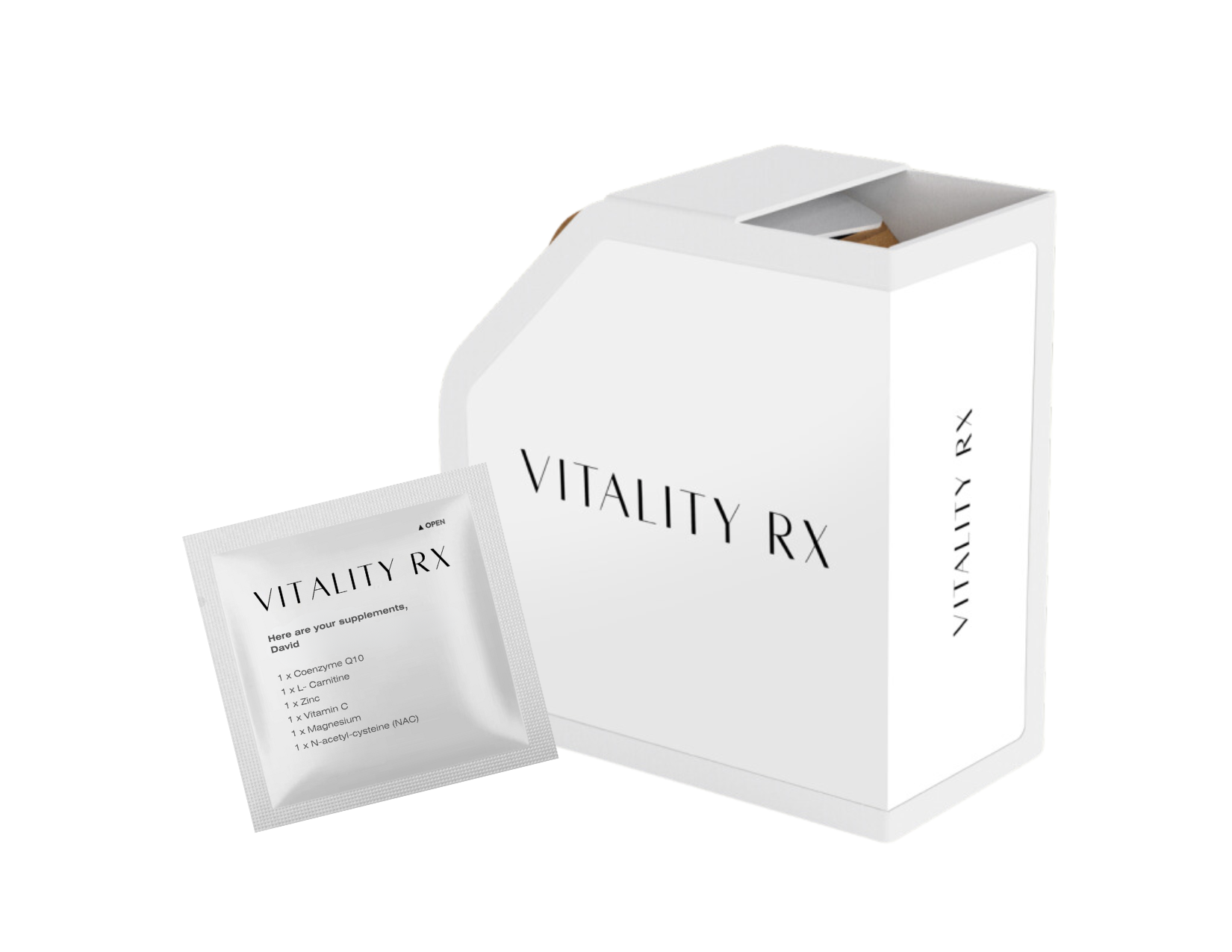
Vitality Stacks personalized supplement pack

The Clinical Picture

The physiological debt of service.

Military service creates predictable, documented patterns of depletion and damage. Most go unaddressed — not because they're untreatable, but because conventional medicine isn't looking for them.

44%

Veterans report chronic pain

Musculoskeletal injury, joint damage, and systemic inflammation from blast exposure are common. Standard VA prescribing tends to compound the problem rather than address the underlying depletion.

2–3×

Higher rate of testosterone deficiency in male veterans vs. civilians

Chronic stress, sleep deprivation, TBI, and opioid use all suppress testosterone through documented mechanisms. Many veterans fall into a gray zone where symptoms are real and bloodwork is inconclusive.

53%

Report clinically significant sleep disturbance

Chronic sleep deprivation drives hormonal dysfunction, cognitive impairment, emotional dysregulation, and metabolic dysfunction simultaneously. You cannot address pain, mood, or hormones without addressing sleep first.

The most under-discussed issue in veteran health: medication-driven nutritional depletion. SSRIs, opioids, PPIs, antipsychotics, benzodiazepines — each depletes specific nutrients. A veteran on four or five of these simultaneously is experiencing compounded depletion across every major physiological system. It's pharmacologically documented and almost never addressed clinically.

Why This Isn't One-Size-Fits-All

Same service. Different body. Different stack.

Two veterans can serve in the same unit and leave with entirely different physiological profiles. What matters is the specifics of your picture — not a generic veteran protocol.

Blast and concussion history

Blast exposure is the single biggest predictor of neuroinflammatory burden. Multiple exposures create a compounding deficit in neuronal health and cortisol regulation that requires a fundamentally different approach.

Your current prescriptions

The medication list predicts the depletion profile more precisely than almost anything else. SSRIs, opioids, PPIs, and antipsychotics each deplete specific nutrients — often exactly the ones driving your primary complaints.

Active regenerative therapies

Veterans doing HBOT, peptides, TRT, or psychedelic-assisted therapy need supplementation that amplifies those protocols — not a generic stack. Co-factors matter enormously. Whether you're in a treatment cycle or maintaining between sessions changes what you should be taking.

Mental health presentation

PTSD, anxiety, depression, and cognitive fog each have distinct neurochemical signatures and distinct nutritional levers. Cortisol-driven depletion requires different support than serotonin-pathway dysregulation.

Where you are post-separation

Recent separation brings acute HPA axis recalibration and sleep architecture rebuilding. Long-term veterans carry accumulated depletion and chronic condition management. The phase determines the priority tier.

What you're trying to get back

Peak physical performance, chronic pain management, TBI recovery, and hormonal rebalancing each require meaningfully different protocols. The consultation identifies your highest-priority signals and weights the stack accordingly.

For Veterans in Regenerative Therapy

Your clinic is doing the heavy lifting. Supplements are the infrastructure.

A growing number of veterans are investing in HBOT, peptide protocols, PRP, TRT, and psychedelic-assisted therapy. Supplements aren't competing with those interventions — they're the nutritional substrate that determines how much of that work holds.

Hyperbaric Oxygen (HBOT)

HBOT generates reactive oxygen species as a byproduct of the hyperoxic environment. Antioxidant status — Vitamin C, NAC, CoQ10, Omega-3s — determines whether the body capitalizes on the repair signal or absorbs oxidative damage. Doing HBOT without adequate antioxidant support leaves results on the table.

PRP & Stem Cell

These therapies depend on the body mounting an organized repair response — which requires zinc (tissue remodeling), Vitamin D (immune-mediated repair), Omega-3s (resolving post-injection inflammation), and adequate protein substrate. Nutritional deficiency directly blunts the regenerative response.

Peptide Protocols

Peptides signal the repair pathway. The pathway requires nutritional substrate to execute. BPC-157's healing mechanisms overlap directly with zinc co-factors. Growth hormone secretagogues work better in the context of adequate sleep — which requires Magnesium Glycinate. Peptides and targeted supplementation are synergistic, not redundant.

Psychedelic-Assisted Therapy

Psychedelics open a window of enhanced neuroplasticity. The nutritional angle: serotonin synthesis depends on tryptophan, B6, zinc, and Magnesium Glycinate — going in depleted is suboptimal. The post-session window is supported by Omega-3 DHA (neuronal membrane fluidity) and Lion's Mane (NGF stimulation). Integration clinicians are beginning to specifically recommend this stack.

Testosterone Replacement (TRT)

TRT increases demand for zinc, Magnesium Glycinate, and Vitamin D3 to support androgen metabolism. Without nutritional co-factors, TRT delivers partial results. This is also Vitality Stacks' most direct bridge to the full Hormone Reboot Program — for veterans whose stack reveals a hormonal component worth investigating further.

See which supplements are relevant to your protocol.

Whether you're doing HBOT, peptides, TRT, or psychedelic therapy, the consultation accounts for your active treatments and builds a stack around the co-factors those protocols require.